

Practicing Mindfulness in Hobbies
In a world full of notifications, deadlines, and constant noise, it can be hard to slow down. Mindfulness, being fully present in the moment, is often associated with meditation or yoga, but it doesn’t actually have to be that formal. One of the most natural and enjoyable ways to practice mindfulness is through hobbies.
What Is Mindfulness, Really?
Mindfulness means paying attention to what you’re doing right now, without rushing or judging yourself. It’s about noticing details: how something feels, sounds, or looks, and letting your mind focus on the present instead of thoughts about the past or future.
Hobbies Are Perfect for Mindfulness
Hobbies are activities we choose because we enjoy them. That makes them ideal for mindfulness, since we’re already more relaxed and motivated. When you’re absorbed in a hobby, your attention naturally narrows, helping quiet mental clutter and reduce stress.
Everyday Hobbies That Encourage Mindfulness
You don’t need a special or “calm” hobby to be mindful. Almost any activity can become a mindfulness practice if you approach it intentionally.
Creative hobbies like drawing, painting, writing, or playing music help you focus on movement, rhythm, and expression.
Physical hobbies such as walking, dancing, or stretching allow you to notice your breathing and body movements.
Hands-on hobbies like cooking, baking, gardening, or crafting encourage awareness through touch, smell, and sight.
Quiet hobbies such as reading, puzzles, or journaling can help slow racing thoughts and improve concentration.
How to Practice Mindfulness While Doing a Hobby
You don’t need to change what you do—just how you do it.
Remove distractions: Put your phone away or silence notifications.
Focus on your senses: Notice textures, sounds, colors, or movements.
Let go of perfection: Mindfulness isn’t about being good at something; it’s about being present.
Check in with yourself: Notice how you feel before and after the activity.
Practicing mindfulness through hobbies can reduce stress, improve focus, boost creativity, and make your free time more meaningful. Over time, it can even help you become more present in daily life, not just during your hobbies.
Mindfulness doesn’t have to be complicated or time-consuming. By fully engaging in the hobbies you already love, you can create small moments of calm and clarity in your day. Sometimes, the simplest activities are the most powerful ways to reconnect with yourself.
Written by: Olivia Clark, MA, LPCC, BCN

Neurofeedback vs. Medication: Understanding the Difference
Medication has long been a standard treatment for mental health conditions such as ADHD, anxiety, depression, PTSD, and sleep disorders. For many people, medication can be helpful—especially in reducing acute symptoms.
Neurofeedback offers a different approach. Rather than introducing a chemical into the body, neurofeedback helps the brain learn to regulate itself more effectively through real-time feedback.
Because these approaches work in fundamentally different ways, many people are curious about the key benefits of neurofeedback compared to medication.
What Is Neurofeedback?
Neurofeedback is a non-invasive, brain-based therapy that measures electrical activity in the brain and provides feedback to the brain which encourages healthier brain patterns.
Over time, the brain learns to maintain more balanced functioning, which may support improvements in mood, focus, emotional regulation, sleep, and stress tolerance.
Key Benefits of Neurofeedback Over Medication
1. Targets Root Brain Patterns, Not Just Symptoms
Medication primarily works by altering neurotransmitter levels to reduce symptoms. While effective for some, it does not directly retrain brain functioning.
Neurofeedback:
Works with the brain’s natural learning processes
Aims to improve underlying self-regulation
Supports long-term changes in brain activity
This makes neurofeedback especially appealing for people seeking deeper healing rather than symptom management alone.
2. Non-Invasive and Drug-Free
One of the most commonly cited benefits of neurofeedback is that it does not involve medication.
Neurofeedback:
Does not introduce substances into the body
Is non-invasive and generally well tolerated
Can be appropriate for individuals sensitive to medications
This can be particularly important for individuals who:
Experience unwanted side effects from medication
Prefer non-medical treatment options
Have medical reasons to limit medication use
3. Fewer Systemic Side Effects
Psychiatric medications can be life-changing for some, but they may also cause side effects such as:
Sleep disruption
Appetite or weight changes
Emotional blunting
Fatigue or agitation
Neurofeedback side effects, when they occur, are typically mild and temporary, such as brief fatigue after sessions. These effects often resolve as the brain adjusts to training.
4. Supports Long-Term Skill Building
Medication generally works only while it is being taken. When medication is stopped, symptoms may return.
Neurofeedback focuses on teaching the brain new patterns, which may:
Continue after sessions end
Reduce reliance on ongoing treatment
Support lasting emotional and cognitive resilience
Many clients view neurofeedback as an investment in their long-term mental health.
5. Personalized and Brain-Based
Neurofeedback protocols at Alternative Therapeutics are tailored to the individual’s brain activity and symptom profile.
Benefits of this personalized approach include:
Treatment adapted to unique nervous system patterns
Flexibility as symptoms change over time
A more individualized path to healing
This contrasts with medication, which often follows standardized dosing guidelines that may not reflect individual brain differences.
6. Can Complement Therapy and Medication
Neurofeedback is not an “either/or” treatment.
In many mental health practices, neurofeedback:
Enhances psychotherapy outcomes
Supports emotional regulation during trauma therapy
May be used alongside medication when appropriate
For some clients, neurofeedback eventually allows for medication adjustments under medical supervision. For others, it serves as an additional support rather than a replacement.
Important Considerations
While neurofeedback offers many benefits, it is not a quick fix.
Important factors include:
Consistency and number of sessions
Provider training and experience
Integration with counseling and lifestyle support
Medication decisions should always be made in consultation with your medical provider. Neurofeedback is best viewed as part of a comprehensive mental health treatment plan. This is why at Alternative Therapeutics we specialize in combining cutting edge neurofeedback protocols with counseling.
Is Neurofeedback Right for You?
Neurofeedback may be a good option if you:
Want a non-medication approach to mental health care
Experience side effects from medication
Are looking for long-term nervous system regulation
Prefer personalized, brain-based treatment
Final Thoughts: Neurofeedback and Mental Health Care
Neurofeedback offers a unique set of benefits compared to medication, including personalized brain training, fewer side effects, and the potential for lasting change. While medication remains an important option for many, neurofeedback provides an empowering alternative for those seeking a different path to healing.
Written by Mary Beth Stevens, LPCC, BCN

From Play to Perinatal: Reflections on How Motherhood Changed My Work as a Therapist
For the first couple of years as a therapist, my work was filled with floor-sitting, coloring, and the language of play. I spoke in metaphors and feelings charts, built trust through games, and listened to what children couldn’t always say out loud. And then after becoming a mom myself, my work began to change. I found myself drawn toward new moms.
This shift wasn’t sudden so much as it was inevitable. The more time I spent working with clients and going through my own perinatal experience, the more aware I became of the emotional gravity surrounding pregnancy, birth, and the early years of caregiving. I noticed how often the adults in the room were holding everything together while quietly unraveling. I saw how much a child’s world depends on the well-being of their caregivers, and how little space those caregivers are often given to process their own experience.
Working with children trains you to listen beyond words. Kids communicate through behavior, tone, silence, and play. You learn patience. You learn to slow down. You learn that big feelings can live in small bodies.
Most importantly, you learn that context matters. A child’s struggles are shaped by attachment, stress, transitions, and the systems surrounding them. Over time, that awareness naturally expands outward. You expand the lens to include who is caring for them, and how they are processing their own experience. This led me to work with people navigating pregnancy, postpartum, fertility challenges, loss, and the massive identity shifts that accompany becoming, or trying to become, a parent.
New motherhood is often painted in black and white: glowing joy or dramatic struggle. In reality, it lives in the gray. It’s love mixed with grief, gratitude alongside resentment, confidence interrupted by doubt. It is also framed as something instinctual, something you simply step into. But for many, it feels more like a disappearance before it becomes a reemergence. Clients often say, “I don’t recognize myself,” or “I don’t know who I am anymore.”
This is not a failure. It’s a developmental process.
New mothers are navigating a massive transition emotionally, relationally, and neurologically. Their nervous systems are recalibrating. Their priorities are shifting. Their sense of self is being reorganized in real time. They often feel pressure to have it all together. Instead of curiosity, they give themselves criticism. Instead of getting support, they get six weeks of maternity leave if they are lucky.
In many ways, this work is a continuation of what I’ve always done. It’s still about attachment, regulation, and safety. It’s still about helping someone feel safe enough to explore who they are becoming. Now, my work includes identity reconstruction, helping clients process through a traumatic experience that society frames as a normal experience, helping clients grieve parts of themselves that have changed, reconnect with parts that still exist, and slowly build a sense of self that includes motherhood without being consumed by it.
This is not about “getting back” to who someone was before. It’s about discovering who they are now, with more complexity, depth, and compassion than before.
In the journey to becoming a new parent, or being a new parent, progress might look like naming a need, setting a boundary, or allowing conflicting emotions to exist side by side.
It’s not about rushing toward acceptance or gratitude. Sometimes the most meaningful work is simply making space for curiosity and gentleness in the process of discovering an identity. My role isn’t to define that identity, but to help clients find themselves again slowly, honestly, and on their own terms.
I still carry my play-therapy roots with me. I just use different tools now: reflection, normalization, curiosity, and deep respect for how transformative and traumatic new motherhood and the perinatal period can be.
The clients I work with may have shifted, but the heart of the work remains the same: helping people feel less alone, more understood, and more connected to themselves during one of life’s most profound transitions.
And honestly? I can’t imagine doing anything else.
Written by: Olivia Clark-Richards, LPCC, BCN

8 Signs of a Bad Therapist
Starting therapy takes courage. Whether you’re seeking support for anxiety, depression, trauma, or life stressors, therapy should feel like a space that is safe, respectful, and supportive.
While many therapists are skilled and ethical, not every therapist is the right fit—and in some cases, a therapist may be doing more harm than good.
Let’s talk about clear signs of a bad therapist (or simply the wrong therapist for you).
1. They Don’t Listen—or Constantly Interrupt
A therapist should be curious about your experience.
Red flags include:
Frequently interrupting or talking over you
Redirecting sessions to their own agenda
Making assumptions without asking questions
Feeling unheard in therapy is not something you should ignore.
2. You Feel Judged, Shamed, or Invalidated
Therapy should never make you feel small or “wrong” for your feelings.
Warning signs include:
Minimizing your experiences (“It wasn’t that bad”)
Shaming language
Blaming you for your symptoms
This is especially harmful for individuals healing from trauma.
3. They Give Excessive or Rigid Advice
While some guidance can be helpful, therapy is not about being told how to live your life.
Be cautious if your therapist:
Frequently tells you what you “should” do
Pushes their personal beliefs or values
Effective therapy supports your inner decision-making, not dependence on the therapist.
4. There Are Poor or Unclear Boundaries
Ethical boundaries are absolutely essential for safe therapy.
Boundary no-no’s:
Oversharing personal details (especially those that burden you rather than foster your healing)
Blurring professional roles
Ignoring session limits or ethical guidelines
Boundary issues can feel confusing or uncomfortable—even if they seem subtle.
5. They Dismiss Culture, Identity, or Lived Experience
A good therapist is open to learning about your identity and background. A good therapist does not minimize experiences of racism, sexism, or discrimination, and does not assume their worldview applies to everyone. Cultural humility is an essential part of ethical mental health care.
6. Therapy Feels Stuck With No Discussion About Goals
Progress in therapy isn’t always linear—but it should be intentional.
Red flags include:
No clear treatment goals
No check-ins about progress
Months of sessions without direction or reflection
A skilled therapist collaborates with you and adjusts treatment as needed.
7. You Feel Worse Over Time With No Support or Explanation
Therapy can bring up difficult emotions—but this should be done safely and thoughtfully.
Be cautious if:
You consistently feel destabilized after sessions
The therapist pushes you to revisit trauma without preparation
There is no focus on grounding or regulation
Trauma-informed therapy prioritizes nervous system safety.
8. You Don’t Feel Safe Speaking Up
One of the clearest signs something is wrong is feeling afraid to:
Ask questions
Share concerns
Disagree or give feedback
A good therapist welcomes honest conversation and repair.
What a Good Therapist Does Instead
A healthy therapeutic relationship often includes:
Feeling heard and respected
Collaborative goal-setting
Clear boundaries
Openness to feedback
A sense of safety—even during hard work
Trust your instincts. Discomfort from growth feels different than discomfort from harm.
What to Do If You Think You Have a Bad Therapist
If something feels off, you have options:
Name it – If you feel safe, bring up your concerns directly
Seek a consultation with another therapist
Change therapists – This is allowed and often empowering
Report unethical behavior if boundaries or ethics are violated
You are not “failing therapy” by choosing a better fit.
Good therapy supports growth, safety, and self-trust. If you’re experiencing the opposite, it’s okay to walk away and seek something better.
Written by Mary Beth Stevens, LPCC, BCN

How Trisha Yearwood Used LENS Neurofeedback to Restore Clarity
When country music singer Trisha Yearwood opened up publicly about her cognitive struggles after COVID, countless people saw themselves in her story. She described experiencing significant brain fog, forgetfulness, and cognitive issues, symptoms many people experience after illness, chronic stress, or trauma, until she tried LENS (Low Energy Neurofeedback System).
What Is LENS Neurofeedback?
LENS, or Low Energy Neurofeedback System, is an FDA-approved direct neurofeedback technology that uses EEG (electroencephalography) to measure the brain’s electrical activity and administer a gentle electromagnetic signal to the brain. This signal helps to stimulate the brain, disrupt ineffective brainwave patterns, create new neural pathways, and improve overall brain functioning. A typical LENS session is simple and noninvasive:
Sensors are placed on either the scalp and ears or the body to read brain activity.
The system sends a very low-energy, brief signal, often lasting just a few seconds.
You may feel nothing in the moment, or you may notice subtle shifts such as relaxation, lightness, or tiredness.
You monitor for continued changes after session, often lasting only 24-48 hours at first.
Sessions are adjusted based on your sensitivity, reactivity symptoms, and reported responses.
Trisha Yearwood’s Experience With LENS
Yearwood shared that after recovering from a mild case of COVID, she was left with persistent cognitive issues, such as difficulty recalling familiar words, trouble with focus and forgetfulness, and brain fog. These symptoms are hallmarks of both long COVID and chronic stress. She experienced initial hesitation because she “didn’t understand what this does,” but after a friend recommended it, she decided to try it. According to Yearwood, she noticed:
Significantly improved sleep, stating that it was the best sleep she had in 10 years
Reduced brain fog and improved mental clarity, stating that her brain feels like it did in her 30’s
How gentle and passive the treatment felt, emphasizing that sessions are short and don’t require talking like traditional therapy does
To her, the changes felt so profound that she referred to LENS as “life-changing.”
Considering LENS Neurofeedback?
Although effectiveness can vary by condition, over 85% of clients are reported to benefit significantly, and often dramatically, from LENS. LENS can be used to improve symptoms associated with the following conditions:
Neurodevelopmental and behavioral conditions
Mental health conditions and emotional dysregulation
Brain, cognitive, and neurological conditions
Sleep issues
Addictions and dependences
Chronic pain
Trauma and stress
In a world where our nervous systems are constantly overstimulated by technology, emotional overload, or simply the pace of daily life, LENS offers something unique: a quiet, gentle nudge back towards balance. It doesn’t force the brain to change; it simply reminds it of its capabilities. If you’re curious about how you might benefit from LENS, we’d love to talk with you and explore whether it could be a good fit. You can schedule a free consultation call through our website.
You can also refer to our page on LENS or Ochs Labs website directly for more information: https://main.ochslabs.com/about/
Watch the full interview with Tricia here (she starts talking about LENS 30 minutes in).
Written by: Hailey Adams, M.Ed., LPC

Intention Setting in Ketamine-Assisted Therapy: Why It Matters
If you are new to learning about KAP, check out our blog KAP: What You Need to Know
Ketamine-assisted therapy (KAP) has been increasingly popular, and while much attention is often placed on the medicine itself, one of the most important parts of the process happens before a session begins: intention setting.
Intention setting is about creating a gentle inner compass, something that helps guide reflection, emotional openness, and meaning-making throughout the therapeutic process.
What Is Intention Setting?
In the context of ketamine-assisted therapy, intention setting is a collaborative process between client and therapist that helps clarify what the client hopes to explore, understand, or approach during treatment. Unlike a goal, which is outcome-oriented (“I want to fix this problem”), an intention is process-oriented (“I want to approach this experience with curiosity” or “I want to better understand my emotions”).
In KAP, intentions help anchor the experience within a therapeutic framework rather than viewing it as something random or disconnected from personal growth. An intention is not a demand or expectation for a specific outcome. It is a point of focus that supports curiosity, emotional openness, and reflection throughout the therapeutic process.
Examples of intentions may include:
Developing greater self-compassion
Exploring emotional patterns with curiosity
Gaining insight into stress, mood, or relationships
Practicing openness to internal experience
Why Intention Setting Matters in KAP
KAP is designed to support new perspectives and emotional flexibility. Intention setting helps in several key ways:
Creates psychological safety
Reflecting on an intention beforehand can help a client feel more grounded and prepared.Provides direction without pressure
An intention offers a reference point. If the experience moves in an unexpected direction, the intention can still serve as a support to come back to.Supports integration after the session
Intentions give therapists and clients a shared language to reflect on insights and emotions during follow-up integration sessions.Keeps therapy values-centered
The focus stays on healing, self-understanding, and emotional growth—not on the medicine itself.
What Makes a Supportive Intention?
Clients are encouraged to keep their intention open, compassionate, and flexible. Helpful intentions tend to:
Be framed with curiosity rather than judgment
Focus on awareness instead of control
Allow space for emotions, memories, or insights to arise naturally
Examples of gentle, non-directive intentions might include:
“I want to listen to what my inner experience is showing me.”
“I want to explore my relationship with stress more kindly.”
“I want to practice letting go of resistance.”
There is no “perfect” intention. Even noticing uncertainty can be a meaningful place to start. For example, “I don’t know what I need, but I’m open to learning”
Intention Setting as a Collaborative Process
Intention setting is done in collaboration with a trained mental health professional. Your therapist will work with you to explore what feels meaningful, emotionally safe, and aligned with your therapeutic goals, taking into account your history, current concerns, and readiness for treatment. Intentions can evolve. What feels right before a session may shift afterward, and that’s part of the work. Therapy is not about getting it “right,” but about staying engaged with the process.
Integration: Where Intentions Come Full Circle
After a KAP session, intention setting continues to play a role during integration.—the reflective therapy work that helps translate insights into everyday life. Revisiting the original intention can help clients notice:
What themes emerged
What emotions felt significant
What new questions or perspectives arose
Areas for continued growth
Sometimes the most valuable outcome isn’t an answer, but a deeper sense of self-compassion or insight gained.
Intention setting can help transform an experience into meaningful therapeutic work.
When approached with care, guidance, and reflection, intention setting can help ensure that KAP remains what it is meant to be: a structured, ethical, and deeply human process of healing.
Written by: Olivia Clark, LPCC, BCN

Understanding Dissociation: Signs, Symptoms, and Brain-Based Treatment Options
Dissociation is one of the most misunderstood mental health experiences—but it’s incredibly common. Many people live with dissociation without realizing what’s happening or why their mind seems to “check out” during stress, conflict, or emotional overwhelm.
In our practice, we specialize in brain-based therapy for dissociation, including neurofeedback and EMDR therapy, which help clients reconnect with their bodies, regulate their nervous systems, and safely process the root causes of dissociation.
Whether you experience mild spacing out or more intense detachment, this article will help you understand what dissociation is, why it happens, and how modern brain-based treatments can contribute long-term healing.
What Is Dissociation?
Dissociation is the brain’s way of protecting you when it senses danger or emotional overload. Instead of going into fight-or-flight, the mind might:
shut down
disconnect
numb out
escape inward
There can shame around dissociation when we begin to realize it's a stress response. But dissociation is not a weakness—it’s a survival strategy. Many people experience dissociation related to:
trauma or adverse childhood experiences
chronic stress
emotional neglect
overwhelming anxiety
sensory overload
long-term nervous system dysregulation
Understanding dissociation is the first step toward healing it.
Common Signs and Symptoms of Dissociation
Dissociation, like so many mental states, exists on a spectrum. For some people, it shows up subtly; for others, it can be intense and disruptive.
Here are the most common signs of dissociation:
1. Feeling “Checked Out” or Numb
A sense of emotional flatness or detachment from feelings.
2. Losing Time or Having Memory Gaps
You may not remember parts of conversations, events, or your day.
3. Feeling Disconnected From Yourself
A sense of watching yourself from the outside, or feeling like you’re not fully in your body.
4. Feeling Disconnected From Reality
The world may feel foggy, dreamlike, or unreal.
5. Difficulty Focusing
Trouble staying present, hearing information, or staying engaged in tasks.
6. Automatic or Robotic Behavior
Going through the motions without feeling mentally “there.”
7. Emotional Shutdown During Conflict
You may freeze, go blank, or feel like you disappeared inside.
Dissociation becomes problematic when it interferes with daily life, relationships, or functioning—or when you feel you have no control over it.
Why Dissociation Happens: The Brain-Based Explanation
Dissociation is fundamentally a nervous system response. When the brain perceives danger and believes fight or flight won’t work, it may shift into:
freeze
shutdown
collapse
detachment
This is regulated by neural circuits in the brain responsible for threat detection and survival. Over time, if someone experiences repeated stress or trauma, the brain learns that dissociation is the safest option—and begins using it even during non-dangerous situations.
This is why many people say:
“I go numb when emotions get too big.”
“I disappear inside during arguments.”
“My brain shuts down without warning.”
It’s not intentional—your brain is doing exactly what it learned to do to keep you safe.
Brain-Based Treatment Options for Dissociation
Healing dissociation is absolutely possible, especially when treatments address the nervous system, not just thoughts or behaviors. The most effective approaches help retrain the brain to feel safe enough to stay present.
Below are two of the most research-backed, brain-based treatments available.
1. Neurofeedback Therapy for Dissociation
Neurofeedback helps stabilize the brain and reduce the shutdown patterns that contribute to dissociation. It trains brainwave activity so the nervous system feels calmer, more regulated, and more connected.
Potential benefits of neurofeedback for dissociation include:
increasing here and now presence
improved emotional regulation
decreased freeze and shutdown responses
greater focus and awareness
greater ability to stay connected during therapy
reduced overwhelm and nervous system overload
Many clients report that neurofeedback helps them feel “anchored” in their body in a way they’ve never felt before.
2. EMDR Therapy for Dissociation
EMDR therapy is one of the most powerful tools for treating trauma, which is often at the root of dissociation. But EMDR is especially effective because it:
helps reprocess traumatic memories
reduces the need for dissociation as a coping mechanism
integrates fragmented experiences
builds the brain’s tolerance for emotional material
strengthens the ability to stay present during stress
EMDR helps the brain complete the processing that dissociation has been blocking. For clients with significant dissociation, EMDR is often paired with stabilization work and nervous system strengthening before deeper reprocessing begins. This ensures therapy feels safe, grounded, and productive.
Why Combining Neurofeedback + EMDR Works Best
For many clients, dissociation is rooted both in brainwave dysregulation and unprocessed trauma. This is why combining neurofeedback and EMDR often leads to the fastest, most stable improvements. Together, they help clients:
build nervous system capacity
stay present and grounded
process trauma without shutting down
reduce dissociative episodes
increase emotional resilience
reconnect with their bodies
strengthen long-term stability
This integrated approach treats dissociation at the source—not just the symptoms.
Dissociation is a natural response to overwhelming experiences, but it doesn’t have to remain your default. With the right support, your brain can learn new patterns, reconnect with your body, and feel safe enough to stay present. Our practice specializes in neurofeedback therapy, EMDR therapy, and trauma-informed treatment designed specifically for clients struggling with dissociation. If you’re ready to feel more grounded, more connected, and more in control, we’re here to help.
Written by: Mary Beth Stevens, LPCC, BCN

10 Signs of a Trauma-Informed Therapist
Finding the right therapist can feel overwhelming, especially if you have a history of trauma or complex life experiences. A trauma-informed therapist isn’t defined by one specific technique. Instead, they understand how trauma shapes the brain, body, and relationships, and they create a space where healing can happen safely and at your pace. After sifting through therapy practice websites and psychology today profiles, you finally get a consult call scheduled… But now what? Here are 10 signs to help you gauge whether or not a therapist is trauma-informed:
They Prioritize Safety Above All Else
Healing cannot happen without a sense of safety: emotional, relational, and physical. A trauma-informed therapist intentionally creates a safe space, emphasizing choice, consent, and collaboration. You may notice that they:
Check in with you regularly
Never push you to disclose details before you're ready
Practice regulation strategies with you in session
Are mindful of your sensory sensitivities and preferences
A question you might ask: “How do you create a safe and supportive environment for trauma survivors?”
2. They Understand How Trauma is Stored in the Body
Trauma isn’t a story we narrate and analyze but rather a collection of emotions and experiences we store in our nervous system. A trauma-informed therapist understands this and incorporates nervous system regulation strategies like sensory grounding, breathwork, mindfulness meditation, or somatic movement before diving into deeper work. Everyone has a “window of tolerance”, or emotional range where we can process information without shutting down or becoming overwhelmed. Trauma-informed therapists:
Attune to your body language, monitoring your cues for dysregulation
Slow down or pause when needed
Provide grounding, movement, or other regulation strategies, offering to practice them together in session
Focus on establishing trust, safety, and stabilization before deeper work
A question you might ask: “How do you handle distress or triggers as they come up in therapy?”
3. They Move at Your Pace
A trauma-informed therapist recognizes that sometimes slow is fast, meaning that rushing the process can be harmful, not helpful. They regularly check in about:
Whether you feel ready to explore something deeper
What feels overwhelming or too intense
While they may ask questions to understand your experiences, there is no expectation to share more than you’re ready to share.
A question you might ask: “What’s your intake process like?”
4. They Recognize Protective Parts and Defense Mechanisms as a Normal Part of the Therapeutic Process
Trauma-informed care is rooted in compassion and curiosity. A trauma-informed therapist recognizes that symptoms like irritability, avoidance, or hypervigilance are survival strategies that likely protected you at some point in your life. Rather than pathologizing your behaviors, they help you understand them with compassion and clarity.
A question you might ask: “How do you handle protective parts and defense mechanisms as they come up in therapy?”
5. They Are Grounded in Evidence-Based Trauma Modalities
While treating trauma is not a “one size fits all” approach, many therapists have specialized training in trauma-informed modalities such as:
EMDR (Eye Movement Desensitization and Reprocessing)
Somatic therapy
Internal Family Systems (IFS)/Parts work
Polyvagal theory
Trauma-Focused CBT/DBT
Your therapist doesn’t need to use all of these, but they should be comfortable explaining their approach.
A question you might ask: “What training do you have in trauma-informed care?”
6. They Take Time to Answer Questions and Explain the “Why” Behind Their Techniques
Transparency builds trust. A trauma-informed therapist wants you to understand the process so you feel empowered to make decisions about your treatment. They may explain:
Why they are suggesting a particular intervention
What you can expect during and after a session
A question you might ask: “What do you consider informed consent throughout treatment?”
7. They Encourage Feedback and Repair Ruptures Without Defense
The therapeutic relationship is proven to be the most important factor in a client’s therapy outcomes. A trauma-informed therapist will prioritize the therapeutic relationship above all else, recognizing that humans are relational beings and therefore need relational safety to heal. They encourage you to say things like:
“I’m not sure this approach is working.”
“It upset me when you responded that way.”
“I don’t like how that session went.”
“I feel uncomfortable with that.”
Instead of reacting defensively, a trauma-informed therapist will respond with curiosity, validation, and a willingness to adjust.
8. They Consider You to be the Expert in the Room
Trauma often involves a loss of control. A trauma-informed therapist emphasizes collaboration, not power. They encourage choice by offering options and welcoming feedback. You’re a partner in the therapy process, not a passive participant. No one can be an expert on your life experiences except you!
9. They Create a Culturally Sensitive Space
Trauma doesn’t exist in a vacuum. A trauma-informed therapist considers the impact of individual identity, culture, race, gender, sexuality, systemic oppression, and environmental factors. They work to create a space that is:
Inclusive
Affirming
Respectful of your lived experiences
A question you might ask: “How do you define cultural competence or cultural humility in your work?”
10. They are Continually Learning
Trauma research is constantly evolving, and trauma-informed therapists stay engaged with new information. They reflect on their own biases, seek supervision, and invest in ongoing education. Their humility is part of what keeps therapy safe.
Trauma can make it hard to trust others, including therapists. Recognizing the signs of trauma-informed care can help you choose someone who honors your story and empowers your healing.
Written by: Hailey Adams, M.Ed., LPC
Ketamine-Assisted Therapy in Cuyahoga Falls & Akron, Ohio: What You Need to Know.
Ketamine-assisted therapy (KAP) is emerging as a powerful and evidence-based approach for individuals seeking relief from depression, anxiety, and trauma. For those searching for ketamine-assisted therapy in Cuyahoga Falls or ketamine therapy in Akron, Ohio, this innovative treatment offers a unique blend of neuroscience and psychotherapy designed to support lasting mental health improvement.
If you’re exploring alternative mental health treatments in Cuyahoga Falls or Akron, understanding how KAP works, who it helps, and what to expect can guide your decision toward healing.
Why Consider Ketamine-Assisted Therapy for Mental Health?
Many individuals consider ketamine-assisted therapy after finding limited success with traditional therapy or medication. Ketamine works differently than standard antidepressants by increasing neuroplasticity and enabling the brain to shift rigid thinking patterns.
People seek ketamine therapy for concerns such as:
Treatment-resistant depression
Chronic anxiety or panic disorders
PTSD and complex trauma
Emotional numbness or burnout
Persistent suicidal ideation
Feeling stuck or disconnected
When combined with psychotherapy, ketamine-assisted therapy can help clients:
Increased emotional flexibility
Improved mood and hope
Greater insight and self-awareness
Enhanced trauma processing
Long-term symptom relief
This approach allows individuals to explore emotions and internal experiences with greater openness and reduced fear.
Who Is a Good Fit for Ketamine-Assisted Therapy?
A good candidate for ketamine-assisted therapy is someone who:
Feels stuck in traditional mental health treatment
Seeks deeper therapeutic work
Is psychologically stable and medically screened
Is committed to preparation and integration sessions
Has a safe and supportive environment
KAP may not be appropriate for those with:
Active psychosis or severe dissociative disorders
Uncontrolled medical conditions
Severe substance dependency without stabilization
Significant safety concerns
Professional assessment and careful screening ensure safe and ethical delivery of ketamine-assisted psychotherapy.
What Does Ketamine Feel Like in a Therapeutic Setting?
During ketamine-assisted therapy sessions, individuals typically describe the experience as:
Deeply introspective
Dreamlike or expansive
Emotionally open yet grounded
Temporarily dissociative
Calm and reflective
Clients often feel a gentle separation from their usual mental patterns, allowing them to approach difficult memories and emotions with increased clarity and compassion. Each session is guided by a trained therapist to ensure safety, integration, and therapeutic meaning.
The Importance of Set and Setting in Psychedelic-Assisted Therapy
In any form of psychedelic-assisted therapy, “set and setting” directly influence therapeutic outcomes.
Set (Mindset)
Preparation sessions focus on:
Clarifying intentions
Addressing fears or expectations
Emotional readiness
Building therapeutic trust
Setting (Environment)
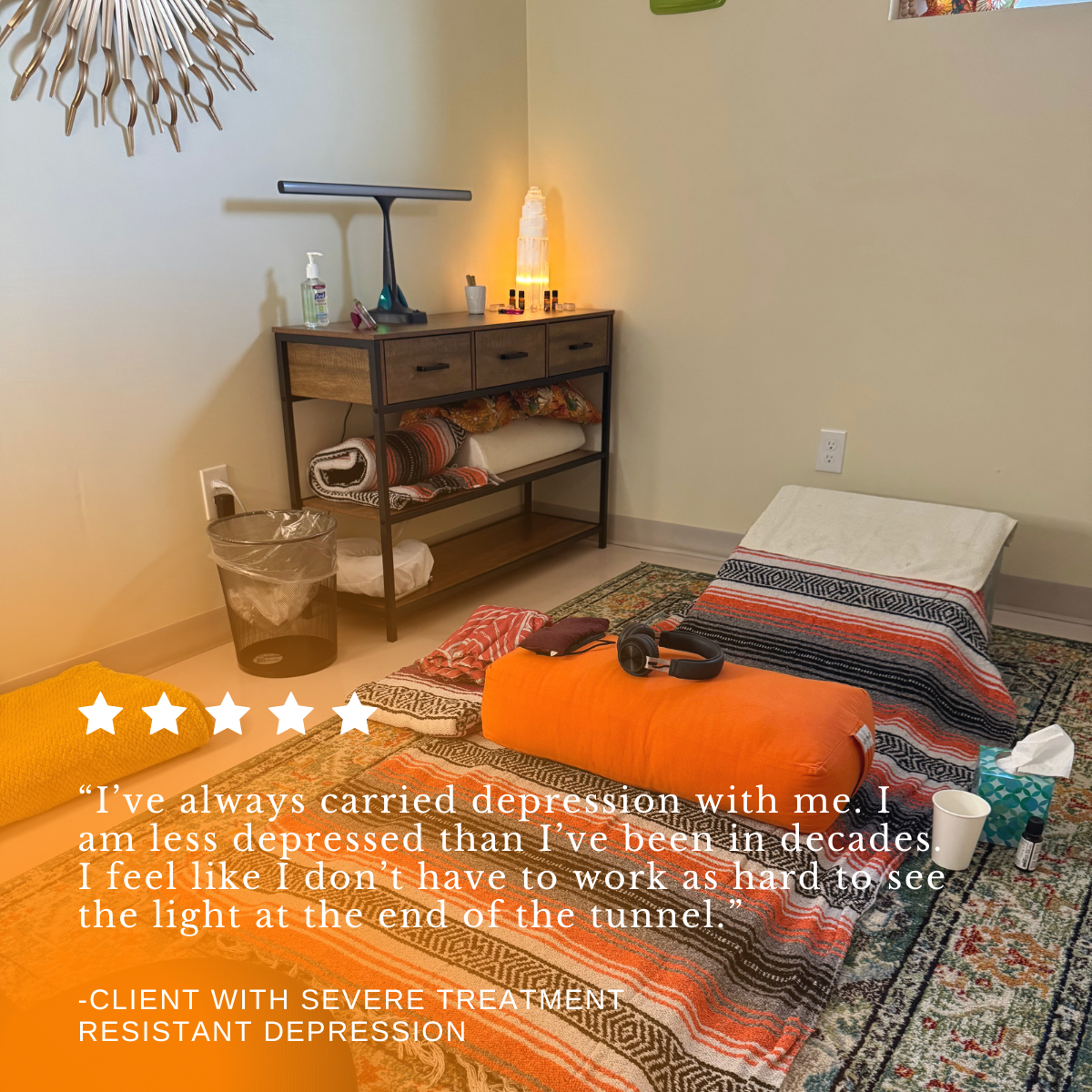
A professional ketamine therapy clinic prioritizes:
Calming, private spaces
Comfortable options for resting during the dosing session
Soothing music and lighting
Trauma-informed therapist presence
Clear safety protocols
This intentional environment allows the nervous system to relax, helping clients feel safe enough to explore deeply emotional material.
Ketamine-Assisted Therapy in Cuyahoga Falls & Akron: A Modern Path to Mental Wellness
For individuals seeking advanced mental health care in Cuyahoga Falls and Akron, Ohio, ketamine-assisted therapy offers a transformative option grounded in science, compassion, and therapeutic support.
When delivered ethically and intentionally, ketamine-assisted psychotherapy can help individuals reconnect with themselves, process unresolved trauma, and cultivate emotional resilience.
If you’re considering ketamine-assisted therapy for yourself or a loved on, a consultation with one of our trained providers can help determine whether this approach aligns with your needs and goals.

7 Key Benefits of Group Ketamine-Assisted Therapy
Group Ketamine-Assisted Therapy (G-KAP) is an emerging therapeutic approach that combines the neuroplasticity-enhancing effects of ketamine with the supportive dynamics of group therapy. This modality offers several unique benefits:
1. Enhanced Emotional Processing
Ketamine can lower psychological defenses, allowing individuals to access and process deep-seated emotions and memories. In a group setting, sharing these experiences can amplify healing, as participants offer support and validation to one another.
2. Stronger Sense of Community
Participating in KAGT fosters a sense of belonging and reduces feelings of isolation. The shared journey creates a supportive network, which can be crucial for individuals facing mental health challenges.
3. Accelerated Healing
The collective energy and shared insights in a group can expedite personal healing. Observing others' breakthroughs can inspire and motivate participants, leading to faster and deeper therapeutic progress.
4. Diverse Perspectives
Engaging with individuals from varied backgrounds and experiences can provide new coping strategies and viewpoints, enriching one's own healing process.
5. Cost-Effectiveness
Group therapy sessions are often more affordable than individual ones, making ketamine-assisted therapy accessible to a broader range of individuals seeking treatment. Here at Alternative Therapeutics, we offer a sliding scale for G-KAP ranging from $150, $250 or $350 per 4 hour group session.
6. Reduced Stigma
Being part of a group normalizes the therapeutic process, reducing the stigma associated with mental health treatment and encouraging more individuals to seek help.
7. Integration of Experiences
Group discussions before and after ketamine sessions facilitate the integration of experiences, helping participants make sense of their journeys and apply insights to their daily lives.
Overall, Group KAP harnesses the power of community to enhance the therapeutic effects of ketamine, offering a holistic approach to mental health treatment. However, Group KAP isn’t for everyone. Those who struggle with severe social anxiety or feel strongly about privacy, may be better suited for 1:1 KAP.
Learn more about what we offer with KAP here. Reach out to britney@trainyourbrainohio.com with any questions or a free introductory consultation.